Home
Home, for Bilbo Baggins, is not merely a dwelling but the very definition of his character and the anchor of the story's moral geography. It is the hobbit-hole of Bag-End, a place of profound physical comfort and social respectability, which he must abandon for an adventure and to which he returns, irrevocably changed. The entire narrative of The Hobbit is framed as a departure from and a return to this home, making it the story's most significant conceptual landmark.
Identity and the Comfort of Bag-End
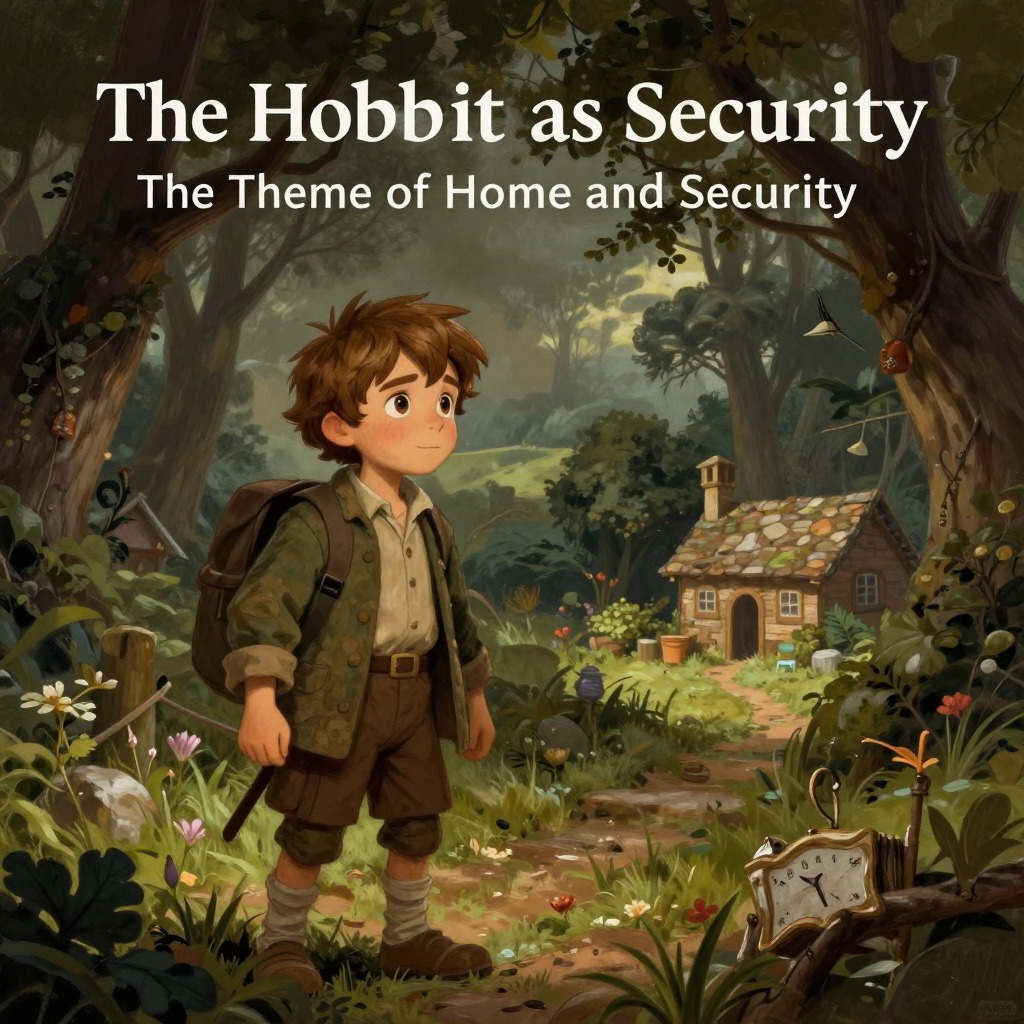
Bilbo's home is described in the book's opening sentence: "In a hole in the ground there lived a hobbit." This is not a nasty, dirty hole, but a "hobbit-hole, and that means comfort." It has a perfectly round green door, a shiny brass knob, and a tunnel-like hall with panelled walls, tiled floors, and polished chairs. The best rooms have deep-set round windows overlooking a garden and meadows sloping down to a river. This home was built by Bilbo's father, Bungo Baggins, for his mother, Belladonna Took, and is described as "the most luxurious hobbit-hole" to be found. Bilbo's identity is so intertwined with his home that his very name, Baggins, is associated with a settled, unadventurous life. The Bagginses were considered very respectable because they "never had any adventures or did anything unexpected." The story is explicitly framed as a tale of how a Baggins had an adventure, and the narrative tension is set between the pull of this comfortable home and the call of the unknown.
The Call of Adventure and the Longing for Home
The adventure begins with an intrusion into this domestic sanctuary. Gandalf's arrival and the subsequent "Unexpected Party" of thirteen dwarves disrupt Bilbo's quiet life. The dwarves' song of the Lonely Mountain stirs a "Tookish" desire in him, but he quickly reverts to being "plain Mr. Baggins of Bag-End, Under-Hill." Throughout the journey, home becomes a recurring symbol of safety and comfort, a place he longs for in moments of peril. When captured by goblins, he wishes "again and again for his nice bright hobbit-hole." During the miserable journey through Mirkwood, he sits staring west, thinking of "the quiet Western Land and the Hill and his hobbit-hole under it." Even in the dragon's lair, he wishes he could "wake up and find this beastly tunnel was my own front-hall at home." The memory of home is a constant, bittersweet counterpoint to the dangers of the road.
The Return and the Transformation of Home
Bilbo's return to Bag-End is not a simple homecoming. He arrives back in the middle of an auction, where his belongings are being sold because he was "Presumed Dead." His cousins, the Sackville-Bagginses, are measuring his rooms. He must buy back much of his own furniture, and many of his silver spoons mysteriously disappear. He finds he has lost more than spoons; he has lost his reputation. He is no longer considered quite respectable, but is held to be "queer" by most hobbits. Yet, Bilbo does not mind. He is quite content. The sound of the kettle on his hearth is more musical than ever. His sword hangs over the mantelpiece, his coat of mail is on a stand in the hall, and he uses his magic ring to avoid unpleasant callers. He takes to writing poetry and visiting elves. Home has been physically restored, but its meaning has been permanently altered by the adventure. It is no longer a place of mere respectability, but a sanctuary for a changed hobbit who has seen dragons and befriended elves, a place where the memory of his journey lives on in the objects he displays and the stories he tells.